

Signal rituals: a field guide to workshop objects

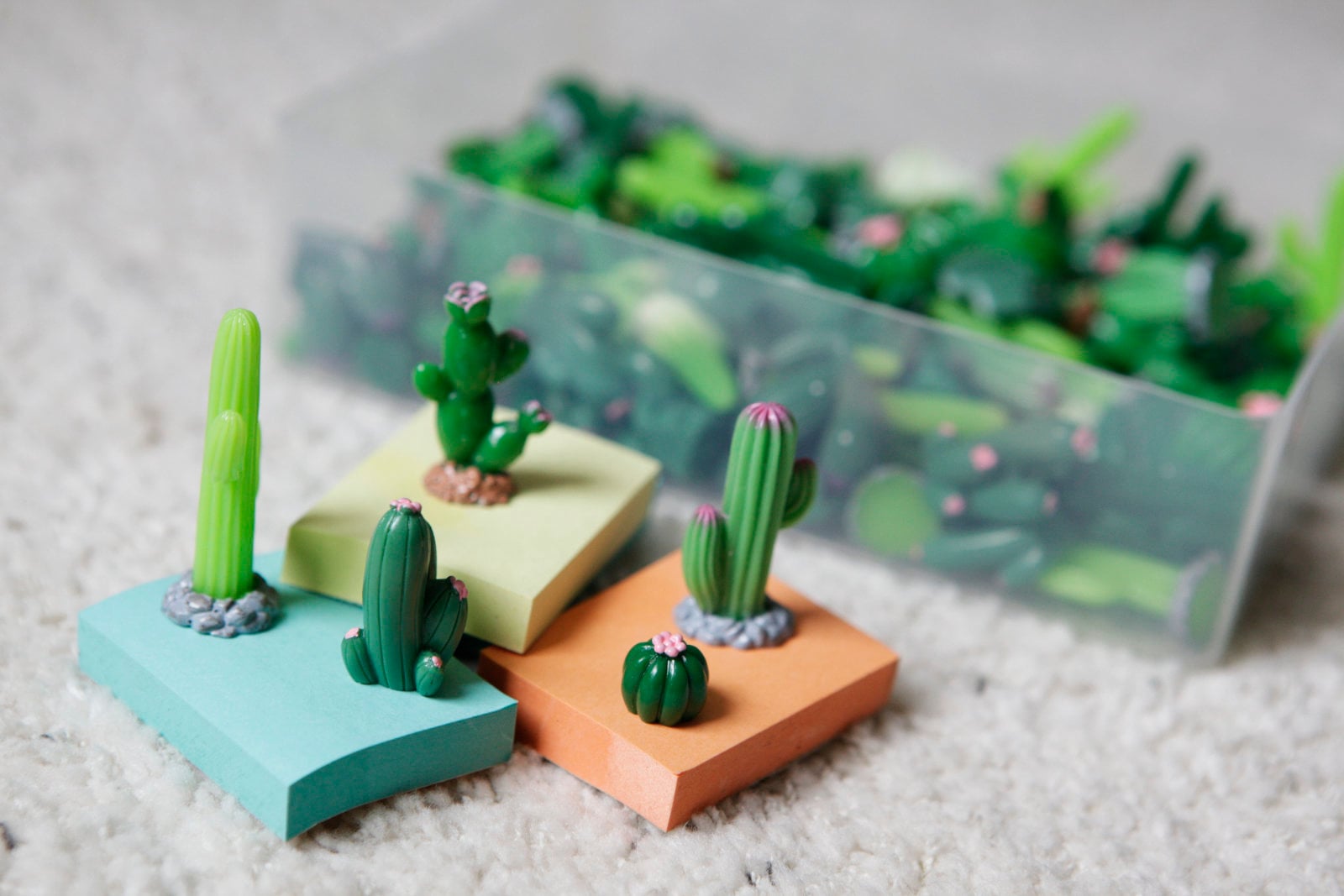
A few weeks ago I wrote about my box of tiny plastic cacti. The idea is simple: when someone in a workshop asks the prickly question, names an honest doubt, or says the thing that could easily stay unsaid, they get a cactus. I model it once or twice, then the box stays in the room and people start giving cacti to each other.
I thought it was a cute trick. Then I posted about it on LinkedIn and facilitators started emptying their workshop bags in my comments. Stuffed rabbits, plush elephants, tiny giraffes, a turtle, a bowl of ducks, an Elmo doll, even a puppet named "one." Over 150 comments of people describing the strange little creatures they bring to serious meetings.
Reading through all of it, I realized these aren't 150 different tricks. They're the same move, dressed up in different animals. This post is my attempt to write the field guide I wish I'd had years ago.
What's actually going on
Here's the pattern under all of it. Something happens in groups constantly that nobody can point at. Someone drifts into a tangent. A tension sits in the room that everyone feels and nobody names. A brave question lands and gets no recognition. These moments are invisible, and invisible things are hard to talk about.
A small object makes the moment visible. Nobody has to tell a colleague "you're derailing us" when the group can simply hand over a rabbit. And naming a conflict cold, the scariest move in any meeting, softens into grabbing the elephant. The rabbit hole becomes the thing everyone looks at together, sitting there on the table, while the person who opened it stays a colleague.
Therapists have a name for this move: externalization. It's the foundation of narrative therapy, a whole school of practice built on separating people from their problems so both can be looked at honestly. I'll be honest that the research isolating this specific mechanism is thinner than I'd like, and I'll come back to what the science does and doesn't support in a separate post. But the underlying idea has carried an entire school of therapy for forty years, and it matches everything I've seen in rooms.
The object alone does nothing, though. I've watched props sit untouched on tables all day. What works is the ritual around the object, and every ritual that landed in my comments has the same anatomy:
- A moment worth marking. A brave question, a tangent, an unspoken issue, an overlong turn.
- A metaphor anyone reads instantly. Prickly means uncomfortable. Rabbit means rabbit hole. If you have to explain it, pick another object.
- The object itself. Small, cheap, easy to pass, impossible to break.
- A phrase that makes it safe. "Respectfully, I'm handing you the rabbit." The words carry the respect so the gesture can't be read as an attack.
- An ownership rule. Who gets to use it: just you, or the whole group? This one matters more than people think, and I'll get to it.
I call the whole package a signal ritual. Miss one part and you've got a gimmick. Get all five right and a two-euro toy starts doing work that a ground rules flipchart never managed.
The field guide
Everything below came from that comment thread or from my own bag. I've grouped the rituals by the moment they mark, because that's the useful question when you're choosing one.
Courage markers
This is my cactus. The moment is a useful but slightly uncomfortable contribution, and the ritual celebrates it on the spot. One commenter does the same thing with tiny giraffes for people who stick their neck out, which I love because the metaphor explains itself even faster than mine.
Courage markers earn their place because they make a group norm visible. Research on psychological safety, going back to Amy Edmondson's founding study of 51 work teams, shows that teams where people feel safe to ask for help, admit mistakes, and raise problems learn more and perform better. Every team says it wants those behaviors. A cactus landing in someone's hand shows the room, in real time, that it's true here.
Drift and pacing signals
The rabbit is the star of this category. A stuffed rabbit sits on the table, and when the group heads down a rabbit hole, anyone can hand it to the person leading the descent. The commenter who shared it reported something I find beautiful: groups become self-moderating, because nobody wants to be the one holding the rabbit.
The turtle does the same job for long turns. One facilitator used it in a networking group where people talked too long; you pass the turtle when your turn is done, and the gentle nudge is "time to pass the turtle."
Then there's ELMO, which stands for Enough, Let's Move On. This one's an established meeting technique from the agile world, and it comes with an important precondition: the team agrees in advance, in its working agreement, that anyone can call ELMO on a discussion. Some teams set a threshold, like three calls from different people and the topic drops. The documented prop is an Elmo doll. One commenter ordered one, received a Cookie Monster by mistake, and reported it works exactly as well. That mistake is quietly profound: the agreement carries the ritual, and the doll is just the fun part.
A warning for this whole category. Drift signals mark behavior people would rather not be caught doing, which makes them the easiest rituals to weaponize. Handed over with a smirk, the rabbit becomes an insult. The sanctioned phrase and an early, light touch are your protection. If the rabbit only comes out after twenty minutes of built-up frustration, it lands as an accusation.
Truth surfacers
A plush elephant, within everyone's reach. When someone feels there's an elephant in the room, they place it on the table, or simply grab it. They don't even need the words yet; the gesture asks the question, and the facilitator's job is to turn to the group and ask "so what's the elephant?"
My favorite story from the entire thread lives here. A team in a difficult transition drew their unspoken elephants in a session. Afterwards, the team leader bought a stuffed elephant that went to the center of the table at every team meeting, and anyone could grab it to name what wasn't being said. Four years later, it's reportedly still in play. A workshop exercise became a piece of team infrastructure.
One caution: this is the highest-stakes category. If the surfaced issue is genuinely painful, a plush toy can feel dismissive. I name it explicitly when I introduce any of these: this looks silly, and it's here to help us say something important. And if a group's trust is truly low, the elephant will simply never be touched. That silence tells you something a survey won't.
Language interrupters
The oddest and maybe cleverest entry: a puppet named "one." When a participant slides into abstract mode ("one has to be more strategic..."), they're handed the puppet, and the statement gets reframed into first person: "I have done..." The puppet holds the abstraction so the person can step out of it and speak from experience.
This category needs the most facilitator judgment. The interruption lands on an individual by design, so it only works once rapport exists. Never in the first hour.
The ancestors
None of us invented any of this, and it's worth saying plainly. The oldest and most codified object ritual is the talking piece, which comes from Indigenous North American traditions: a stick, a feather, or another meaningful object passed around a circle, where only the holder speaks and passing without speaking is always allowed. It's now standard practice in restorative justice circles, classrooms, and healthcare. Every pass-the-object ritual in this guide is a descendant of that lineage.
The practice literature around talking pieces also answers the objection every one of these rituals gets, which is that it feels like kindergarten. The documented answer is to choose an object that means something to this specific group. My favorite recorded example: a construction crew held a difficult safety conversation passing the hard hat of a workmate they'd lost. Nobody in that room thought it was childish.
The design decision that matters most
Notice something about the best stories above. The rabbit travels hand to hand between participants. Anyone could grab that team's elephant. The cacti box stays in the room for people to use on each other.
Every signal ritual sits somewhere on a spectrum of ownership. At one end, the facilitator is the only one who uses it. At the other, the object belongs to the group and anyone can invoke it. Where your ritual sits on that spectrum decides whether it works, and I mean that literally: there's solid evidence that the same playful mechanic helps or backfires depending on whether the group has adopted it or had it imposed. A thoughtful commenter on my original post challenged the whole cactus idea on exactly these grounds, asking whether I was training people to perform courage for my approval.
He was right to ask, and the answer changed how I design these rituals. That deserves its own post, so I've written one: it's the next piece in this series. The short version for now is that I introduce every object with a transfer plan. I model it two or three times, then I hand it over: "from now on, this is yours to give." And then I stop using it.
Before you buy a bag of animals
A few guardrails, learned partly from the thread and partly the hard way:
One object at a time. A full menagerie introduced at once becomes table decoration. Introduce the second ritual only after the group has genuinely picked up the first.
Match the object to the room. The kindergarten objection is real in some cultures, and the answer is either a more meaningful object or no object at all.
Let people opt out. The moment someone can't decline the ritual, you've built a small obligation machine, and obligation kills the playfulness that made it work.
Debrief it. At the end, ask what the object made easier to say, and when it felt awkward. The answers tell you more about the group than the ritual itself did.
And skip the props entirely when a room is grieving or in acute conflict. Some moments need your full seriousness, undiluted.
Try one
If you want to start somewhere, start with the rabbit. Every group on earth has rabbit holes, the metaphor needs zero explanation, and nobody gets hurt being handed a bunny. Put it on the table, explain the phrase, hand it over once yourself with a smile, and then let the group take it from there.
That last part is the whole trick.
This post grew out of the comments on my cactus post, and the ideas in it belong to the dozens of facilitators who shared them there. If objects in facilitation are your thing, my earlier post on the power of tangible objects covers why physical things work differently than words on a slide.
What Science Actually Says About Movement in Workshops (Including Three Things It Doesn't Say)
Five evidence-backed findings about movement in workshops, plus three popular facilitation claims that research does not support.
How to Design a Workshop, Step by Step
A practical step-by-step method for designing workshops by defining outcomes, decomposing the process, and choosing activities last.